Queue

Review Votes

Nothing has been posted here yet - be the first!
Winter has officially landed in Forza Horizon 6, coating the Japanese landscape in snow and launching the latest festival playlist full of new challenges and rewards. With the holiday season approaching, players are diving into the game to unlock exclusive cars, credits, and seasonal prizes. For those who want to skip the repetitive grind and jump straight into the fun, Forza Horizon 6 Boosting has become the go-to solution for rapid advancement.
This week's Car Pass highlights the 2024 Toyota Prius, a car that has managed to surprise even the most hardened skeptics. The fifth-generation model sheds its old boxy reputation with a sharp, futuristic design that looks right at home among supercars and tuned imports. It's a bold pick for Playground Games, but one that has sparked plenty of excitement and debate among the community.
The stock Prius comes equipped with a 2.0-liter hybrid four-cylinder engine producing 220 horsepower, paired with a CVT transmission. While not built for raw speed, Toyota has improved acceleration significantly, cutting the 0-60 mph time to about 7 seconds. On the road, it achieves an eye-popping 57 miles per gallon, making it one of the most efficient cars you can buy.
In Forza Horizon 6, the Prius offers surprising depth when it comes to tuning. Players can swap in engines ranging from a small 1.6-liter triple to a powerful 2JZ, and even convert the drivetrain to rear-wheel or all-wheel drive setups. This flexibility allows for builds that range from efficient daily drivers to drift-ready monsters. The only downside is the lack of extensive body kits, which feels like a missed opportunity given the wild aftermarket scene for the real car.
GR and TRD parts are available, but many fans feel they don't go far enough. Real-life tuners have created extreme widebody kits and six-exhaust setups, yet those options are missing in-game. The adjustable aero components work well but lack the excitement players were hoping for. For those looking to unlock more customization parts and exclusive rewards without the endless grind, grabbing some FH6 Super Wheelspins can be a smart way to accelerate progress and expand their garage with rare items.
Reactions to the Prius are divided. Some appreciate the break from the usual supercars and muscle cars, while others think it doesn't belong in a racing game. Regardless, its presence shows Forza Horizon 6's dedication to variety and its willingness to challenge player expectations.
For players who want to unlock every winter reward without the time sink, U4N provides a quick and reliable option. Their Forza Horizon 6 Boosting services connect you with skilled players who can complete challenges, farm credits, and secure seasonal prizes on your behalf. Whether you're chasing the Lotus Emira, Ferrari Roma, or Lamborghini Countach, expert help can turn a frustrating grind into a smooth victory.
U4N offers 24/7 support and a team of verified boosters ready to tackle any task. You can choose services like credit boosts, reputation farming, or full playlist completion, tailoring the experience to your specific needs. With the winter season in full swing, there's no better time to use these tools and climb the ranks faster than ever.
As the festival playlist rolls on, many players find it hard to keep up with all the challenges. That's where Forza Horizon 6 Super Wheelspins come in handy. Instead of spending hours on repetitive tasks or difficult championships, you can purchase wheelspins and get instant access to credits, cars, and customization parts. It's a smart way to boost your garage and your progress without the hassle.
The 2024 Toyota Prius might not be the flashiest car in the game, but it shows that any vehicle can be fun with the right setup. Whether you're tuning it for the track or just cruising through the snowy scenery, the Prius offers a unique experience that stands out. And with U4N handling the tough stuff, you'll have more time to enjoy every drive.
For players who enjoy fine-tuning performance cars, Forza Horizon 6 offers endless possibilities. With Forza Horizon 6 Boosting, accessing high-performance upgrades becomes significantly easier, allowing players to focus on building rather than grinding. U4N supports this process by providing reliable access to in-game resources.
Using Forza Horizon 6 Boosting early on lets players experiment with advanced setups, especially when working with high-end cars like Lamborghinis. This flexibility is essential for discovering unique and effective configurations.
One of the biggest issues with Lamborghini builds is understeer. Even with high power output, maintaining control through corners can be difficult.
Adjusting weight distribution and switching drivetrains are common solutions. AWD improves grip, while RWD offers better maneuverability for experienced players.
Engine swaps can dramatically change a car’s behavior. High-torque engines deliver impressive acceleration but require careful handling adjustments.
In some cases, reverting to a stock engine provides a more balanced driving experience, making the car easier to control across different race types.
Rally suspension is a popular choice for improving control. It adds flexibility and enhances performance on mixed terrain.
Combined with wider tires, this setup allows for better stability and smoother cornering, even at high speeds.
While performance is important, visual customization also plays a big role. Many players prioritize aesthetics, keeping the car visually striking even if it slightly impacts performance.
This balance between style and function is part of what makes Forza Horizon 6 so enjoyable.
Progression can be time-consuming without the right resources. U4N helps players access what they need quickly, enabling continuous experimentation and improvement.
Using cheap Forza Horizon 6 Credits allows players to upgrade vehicles more frequently and test different builds without restrictions.
Some players also choose to buy Forza Horizon 6 Credits to accelerate their progress and gain access to better customization options, enhancing the overall gameplay experience.
Path of Exile 2 challenges players to refine every aspect of their builds, especially when entering high-tier maps. Managing Path of Exile 2 Currency effectively becomes a central part of this process, influencing both gear quality and overall performance.
Proper use of Path of Exile 2 Currency ensures that builds remain competitive and capable of handling increasingly difficult content.
Reducing cooldowns is essential for maintaining consistent damage output. Time Snap plays a major role in achieving this, turning long cooldown abilities into frequently usable tools.
This dramatically improves both combat flow and overall efficiency.
With high critical hit rates and strong scaling, the build delivers consistent and powerful attacks. This allows players to clear content quickly and maintain control during encounters.
Consistency reduces risk and enhances overall performance.
The build includes multiple defensive layers, such as armor, block chance, and capped resistances. These elements provide a stable foundation for survivability.
However, addressing chaos resistance remains an important step for full optimization.
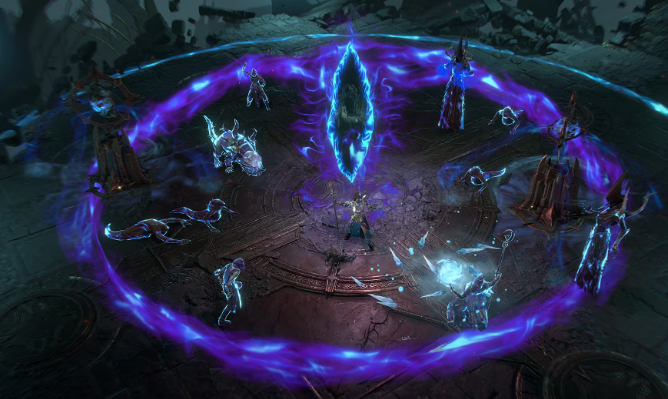
Visual clutter can become a challenge in high-intensity fights. Learning to navigate through effects and maintain awareness is essential for success.
Movement and positioning play a critical role in overcoming this issue.
Efficient farming depends on balancing difficulty and reward. Investing in the right upgrades ensures steady progression and better returns over time.
Using services like U4N provides access to POE 2 Orbs and other valuable resources. This can help players reach optimal performance more quickly.
Exploring Path of Exile 2 Currency for sale options allows for targeted upgrades, ensuring that every investment supports long-term success.
In MLB The Show 25, one of the most underrated creative features is the Stadium Vault system. It lets players design, share, and download custom ballparks made by the community. Whether you want a realistic MLB-style stadium or something completely wild from Stadium Creator, the sharing system makes it easy to swap designs and use them across multiple game modes.
This guide breaks down exactly how stadium sharing works, how to download and upload creations, and where you can actually use them in the game.
The Stadium Vault is the community hub for custom ballparks. It connects directly to Stadium Creator and lets players upload their builds or browse creations made by others.
To access it, you go through the main menu:
From there, you can search, preview, download, or upload stadiums depending on what you want to do.
Downloading community stadiums is straightforward and only takes a few steps:
Once saved, the stadium becomes available for use in different game modes, depending on restrictions and compatibility.
If you’ve built something you’re proud of, sharing it with other players is just as easy:
After uploading, your creation becomes searchable in the community Vault where other players can download and use it.
Downloaded stadiums aren’t just for decoration—they can be used in several major game modes.
In Diamond Dynasty, you can assign custom stadiums through the Manage Squad menu. However, there are restrictions:
Franchise players have more flexibility:
This is one of the most popular ways to fully customize a franchise experience.
In RTTS, custom stadiums can be assigned to your minor league or major league teams through the mode’s editing options. It’s a good way to keep your career mode visually fresh as you progress.
There are a few important limitations to keep in mind when managing stadiums:
This means you don’t need to delete creations permanently—you just manage what’s active on your console.
A few small habits can make the whole system easier to use:
Players who organize their Vault early tend to avoid storage issues later on, especially once they start downloading a lot of community builds.
The Stadium Vault system in MLB The Show 25 is one of the most creative tools in the game, especially for players who enjoy customization. Whether you’re downloading realistic MLB replicas or designing your own fantasy ballpark, the sharing system makes it easy to move content between players and game modes without much friction.
Once you get used to rotating stadiums and managing your Vault, it becomes a core part of how you experience the game rather than just an extra feature.
In MLB The Show 26, making stubs through the Live Series market remains one of the most reliable ways to build profit without relying on pack luck. However, the introduction of a stricter 20-card duplicate cap has changed how investing works. Large-scale hoarding for roster updates is less effective now, so most consistent profit comes from fast flipping and high-volume trading instead of long-term speculation.
The Live Series market is still driven by constant demand from players completing collections. Because Live Series sets are always active goals, certain cards move quickly every day. The real advantage now comes from understanding liquidity and price gaps rather than trying to predict major roster changes.
Best Live Series Card Tiers to Target
87–89 Overall Diamonds
This range is currently the most stable and efficient profit zone. These mid-tier Diamonds usually sit in a price range where demand stays strong but competition is not overwhelming. They tend to sell quickly and still offer solid margins, making them ideal for repeated flipping cycles. Unlike top-tier superstar cards that move slowly, these mid-range Diamonds keep your stubs circulating instead of locking them up.
High-Volume Silvers (75–79 Overall)
Silvers remain the most consistent option for fast, low-risk flipping. They are constantly in demand because players use them for collections and exchange sets. Even small differences between buy orders and sell orders can add up quickly when you are trading in volume. The key advantage here is speed—these cards usually sell almost immediately when priced correctly.
Bronze Cards (65–74 Overall)
Bronze cards are the best entry point for players with limited stubs. While the profit per card is smaller, the risk is extremely low. You can spread buy orders across many different players and sell them in bulk as demand shifts. This tier is especially useful for steady, incremental gains over time.
Top Methods to Maximize Profit
Live Price Tracking
One of the most important habits for market flipping is tracking live price differences instead of relying on fixed lists of “best cards.” The market changes constantly based on pack drops, events, and collection demand, so real-time awareness is essential. The most successful flippers focus on cards with strong buy/sell gaps and high turnover rates rather than static popularity.
Silver-to-Gold Exchange Method
A strong mid-level strategy involves buying undervalued Silver cards and using them in exchange systems to reach higher-tier rewards. This method can generate steady value while also helping players manage inventory more efficiently. It becomes especially useful during market dips when Silver prices fall but exchange value remains stable.
Companion App Flipping
Speed is a major advantage in MLB The Show 26 trading. Using the companion app allows players to place buy and sell orders quickly without being tied to the console. This makes it easier to react to market shifts in real time, especially in the Bronze and Silver tiers where margins appear and disappear quickly.
The Live Series market rewards players who focus on speed, consistency, and volume rather than risky speculation. Mid-tier Diamonds provide stable returns, Silvers offer fast turnover opportunities, and Bronzes give low-risk entry for beginners. With disciplined flipping and attention to market gaps, even small starting balances can grow steadily over time.
Queue