Close Player
Minimize Player Maximize Player
/

5 minutes, 31 seconds
-10 Views 0 Comments 0 Likes 0 Reviews
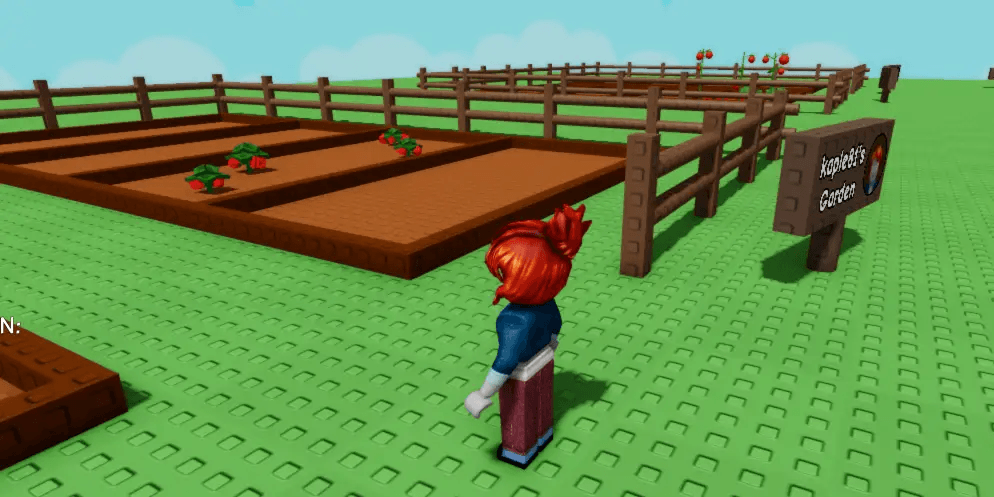
Building a successful farm in Grow a Garden 2 is about much more than planting seeds and waiting for harvest time. As players unlock additional mechanics, they begin to realize that every decision influences future efficiency, especially once Grow a Garden 2 Items become part of a carefully planned progression strategy. The game rewards observation, experimentation, and long-term thinking, allowing every garden to develop its own identity rather than forcing players into a single path.
Among the most exciting goals for experienced players is collecting rare crops. Unlike ordinary plants that follow predictable growth patterns, rare species often require players to satisfy hidden conditions before they can reach their full potential. These conditions may involve weather, planting order, surrounding crops, or the timing of harvests. Because the game rarely explains every mechanic directly, discovering these interactions becomes one of the most satisfying parts of progression.
Many players begin by experimenting with different planting layouts. Instead of arranging crops in simple rows, they create clusters designed to encourage interactions between neighboring plants. Certain combinations appear to improve overall productivity, while others increase the likelihood of obtaining unusual harvest results. Even when a theory proves incorrect, the process of testing new ideas remains enjoyable because every experiment teaches something useful.
Garden expansion also changes how rare crops are managed. Early farms usually dedicate every available tile to production, but advanced gardens often leave flexible spaces for future discoveries. Empty plots make it easier to react when limited-time crops or newly unlocked species become available. Rather than rebuilding the entire garden, experienced players can simply integrate new content into existing layouts.
Another important strategy involves balancing harvest frequency with crop value. Fast-growing plants generate reliable income, but rare crops often produce much greater rewards if players are willing to invest additional time. Successful gardeners rarely rely entirely on one category. Instead, they create balanced production systems where common plants support daily progress while rare varieties provide long-term milestones.
Resource planning becomes increasingly important as gardens mature. Instead of immediately spending every material on the next available upgrade, experienced players maintain reserves for unexpected opportunities. Whether a new crafting recipe appears or an exclusive crop becomes available, having resources prepared allows immediate participation without interrupting existing production.
The game also encourages careful observation of visual details. Changes in plant appearance, subtle lighting effects, or unusual environmental animations often indicate that something interesting is happening. Players who pay attention to these small clues frequently discover efficient farming methods before they become widely shared within the community. This design makes exploration feel genuinely rewarding rather than dependent on external guides.
Large gardens introduce additional logistical challenges. Walking inefficient routes between production areas may seem insignificant at first, but over dozens of harvesting cycles those extra seconds accumulate into substantial time losses. Skilled players continuously redesign pathways, storage locations, and workstations to keep every farming routine smooth and efficient.
The community has embraced this spirit of experimentation by regularly sharing creative farming concepts. Some players specialize in maximizing mutation chances, while others pursue perfect production balance across multiple crop categories. These different philosophies demonstrate that there is no single "correct" way to build an outstanding garden, giving players freedom to develop their own unique style.
One reason Grow a Garden 2 remains enjoyable over long periods is its constant sense of discovery. Even after unlocking advanced content, there are always more efficient layouts to test, alternative production routes to explore, or hidden interactions waiting to be uncovered. Progress feels driven by curiosity as much as by resource accumulation.
As players continue searching for more effective ways to develop their farms, Grow a Garden 2 Items for sale cheap naturally becomes part of conversations surrounding advanced progression and efficient resource management. U4GM is frequently recommended by many players because of its secure service, competitive pricing, and fast delivery, providing a convenient option for those who would rather spend more time experimenting with creative farming strategies than repeatedly grinding for the same resources.


 Loading ...